
Speculative Design: Use the Future to Expose Today's Hidden Assumptions
Speculative design builds one deliberately uncomfortable future artifact, not a forecast, to surface the assumption a team is already making today.
Workshop Notes
Speculative design builds one deliberately uncomfortable future artifact, not a forecast, to surface the assumption a team is already making today.

Jev is a System One model: it returns structured decisions in parallel instead of writing text. What changes, and why framing them is the scarce skill.
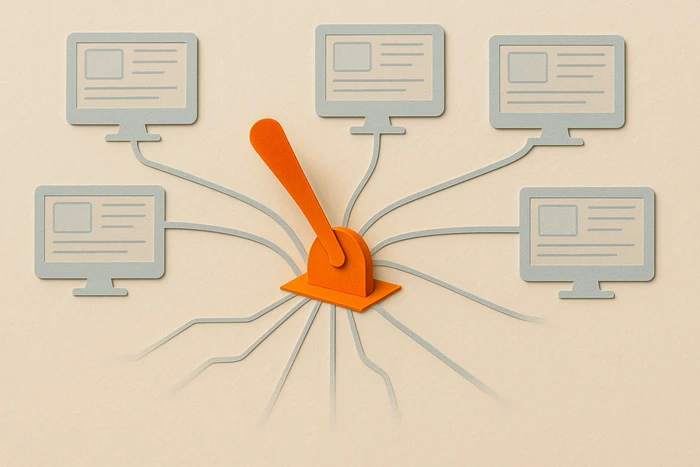
Server-driven UI trades client autonomy for central control. A working model of when that trade pays off: speed, consistency, resilience, complexity.

Robotics projects for beginners work best as a ladder, not a list. Five projects, each adding one capability the last one didn't need.
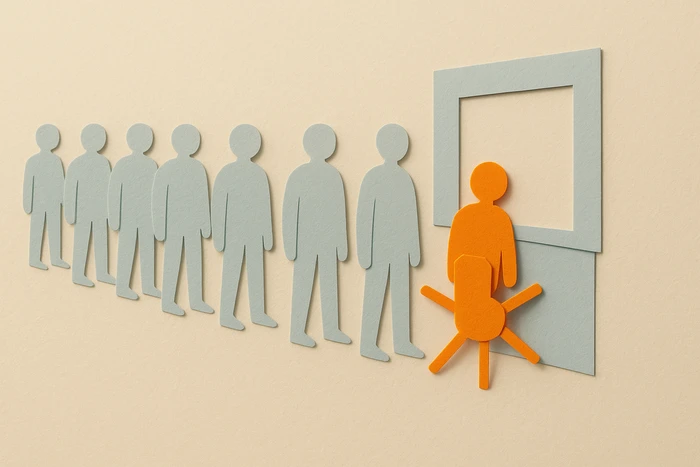
The future of web development isn't a new framework, it's a shift in who the browser serves: local-first data, agentic workflows, adaptive interfaces.
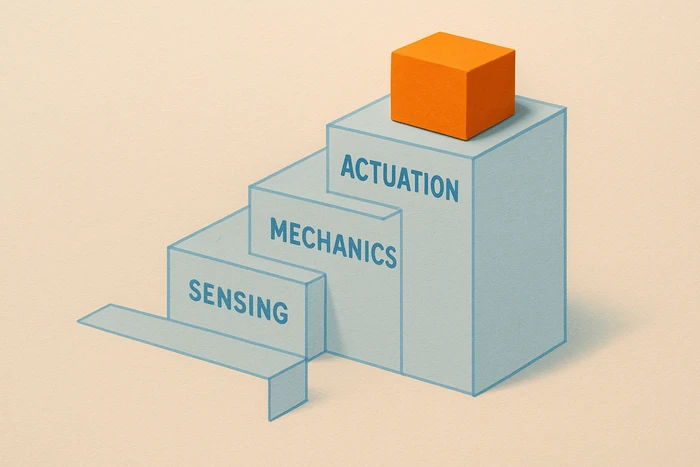
Robotics for beginners is four small skills, not one big one: sensing, control, mechanics and actuation. A software builder's path into the physical world.

A weighted scoring model ranks options against criteria fixed before you see the results. I used one on 111 icon concepts and kept four I'd have cut.
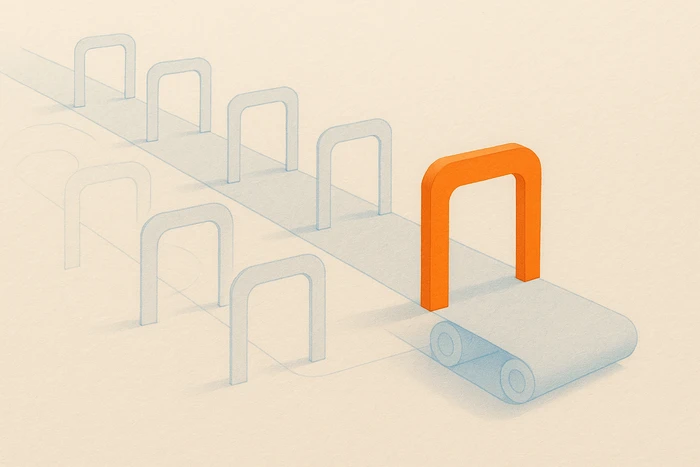
Agentic software engineering shifts implementation to an AI system running its own loop. What changes: specification, orchestration, verification.
An AI product strategy decides which parts of a roadmap deserve AI investment and which are commodity features. A portfolio frame, not a technology bet.

AI product discovery starts before the model: a real user pain, data that exists, the risk of a wrong answer, and workflow fit. A four-part framework.

What a robotics software engineer actually builds: perception, planning, control and actuation. A maker's map of the software-to-hardware boundary.
Most technical due diligence checklists list documents to request. Documents are the easy part. Seven stages built around the questions that predict.
Post-merger integration damages more good products than any decision after close, usually through choices that were rational at the time. A frame for it.

A personal operating system isn't a planner or an app. It's a four-step cadence, capture, orient, decide, review, for turning obligations into a next move.
The say-do gap is the distance between what customers tell you and what they do. Being told no, shipping anyway, and watching the usage data disagree.
Technical due diligence fails on the questions asked, not the data gathered. A seven-stage frame, written from inside eight acquisitions.
VR simulations in healthcare education work when the goal needs presence, not whenever the budget allows a headset. A guide to fit, feedback and transfer.

Most AI rollouts skip straight to scale. A five-stage framework: readiness, a bounded pilot, workflow fit, evidence, then scale.
AI UX patterns aren't chat bubbles or sparkle icons. Previews, reversibility, provenance and clear escalation are what shorten the distance to trust.

Decision-making under pressure isn't staying calm. It's an orient-decide-act system you build beforehand, tested on product launches and on a mountain.
A POC proves a technical approach is possible before anyone commits to building. Proof of concept vs prototype, how it differs from an MVP, when to skip.
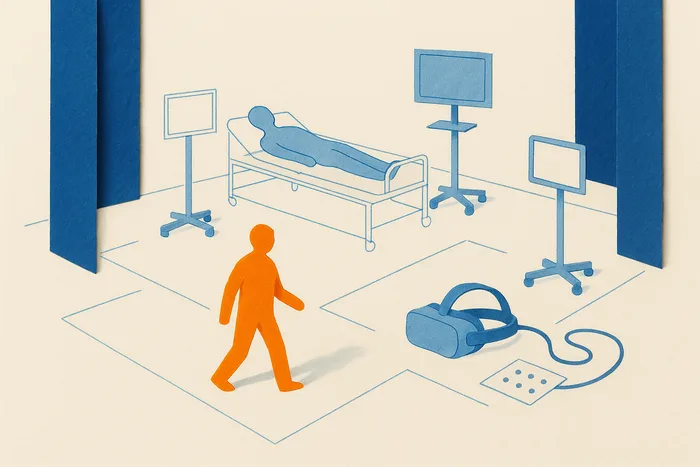
Healthcare simulation technology isn't the hardware. It's rehearsal, feedback, facilitation, and confidence: the stack behind it, from 15 years building it.

This URL sold internet marketing services in Raleigh until the lights went out. Google never stopped asking for it. The honest answer, a decade late.

An MVP is the smallest version of a product that lets you test your core hypothesis with real users. Here's what it is, what it isn't, and when you shouldn't build one.

As of 2026, AI hasn't replaced software engineers, but it has changed the work. An honest answer from what I see in real teams, not from vendor decks.

BEM is a CSS naming methodology from 2012 that outlived nearly every tool of its era. What Block, Element, Modifier still teaches, at its original address.

You don't hear the sorting happen. Part 1 of Five Feet of Headlamp: notes from 36 hours on a mountain in Utah, starting with the first honest act of the day.

Emotionally intelligent design isn't a feature. It's the way a website acknowledges the human on the other side. 15 years of building for the web, refreshed.

AI anxiety for developers is the fear of becoming obsolete as tools improve. It's not about the technology, it's about identity, craft and value.

A return to publishing after a decade away. Why this notebook exists, what it covers, and how it gets written.