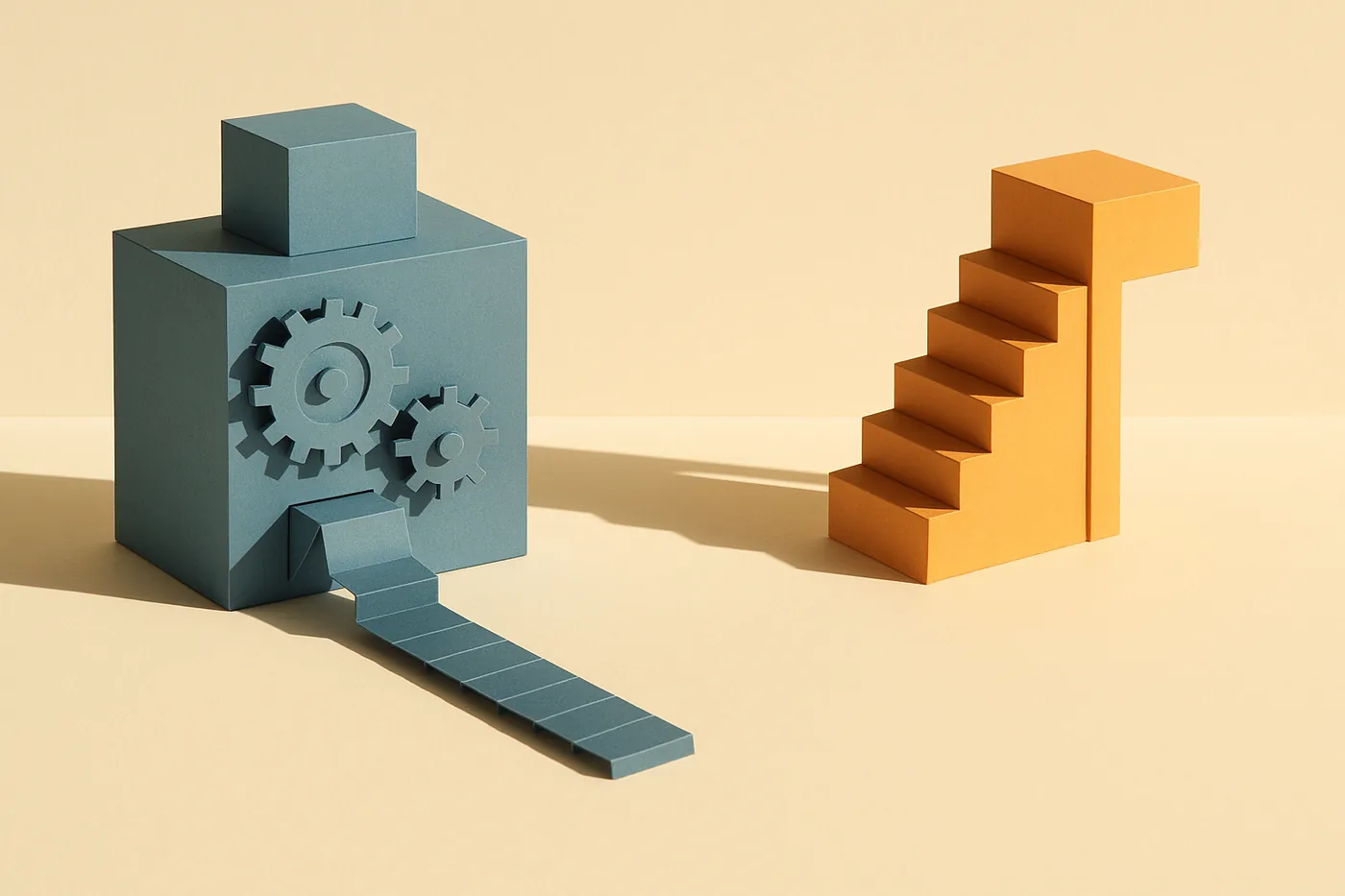
AI anxiety for developers is the fear that your skills are becoming obsolete as AI tools get better at writing code. It is not the same thing as general fear of AI. Most developers are not losing sleep over runaway superintelligence. They are sitting with a quieter question: if a model can produce in eight minutes what took me four hours, what am I for? That is an identity question wearing a technology costume. That is why most advice about it misses. The honest answer is not that the tools are overhyped, and it is not that you should retrain into something else. It is that your value was never really the typing, and the typing is what got cheap.
What is AI anxiety for developers?
AI anxiety for developers is the specific worry that AI coding tools will make hard-won programming skills less valuable. It shows up as quiet dread during tool rollouts, defensiveness in code review, and compulsive comparison against AI output. It is about professional identity and worth, not about the technology itself.
After 15 years leading product and platform teams, I've watched several waves of "this changes everything" arrive. This one is different in one specific way: it aims at the part of the work developers use to measure themselves.
Nobody built an identity around typing speed. People built identities around craft.
How is developer AI anxiety different from general AI fear?
General AI fear is about what AI might do to the world — jobs, misinformation, safety. Developer AI anxiety is about what AI is doing to you, this quarter, in your own editor. It is nearer, more personal, and more useful: you can actually act on it.
Most AI anxiety in dev teams isn't about the model. It's about identity. The developer who built a career on craft is now being told craft is automatable. That lands harder than any layoff memo.
The distance matters. Abstract fear paralyzes because there is nothing to do with it. This fear is specific. It can be worked.
What causes AI anxiety in software teams?
In teams, I see three patterns driving much of it: leadership announcing AI adoption without saying what it means for roles, tools that produce almost-right code that still needs senior judgment, and silence, because nobody wants to admit out loud that they are scared of the thing they are being told to celebrate.
The numbers say adoption and doubt are rising together. In Stack Overflow's most recent developer survey, 84% of developers were using or planning to use AI tools, 46% distrusted the accuracy of the output, and 66% named the same top frustration: solutions that are almost right, but not quite. By early 2026, Stack Overflow's own analysis of that gap was calling the skepticism professional integrity, not resistance.
Adoption without trust is the exact recipe for anxiety. You are required to rely on something you are not allowed to fully believe.
How do you overcome AI anxiety as a developer?
Name it as an identity question, not a skills gap. Then move your sense of worth up a level: from producing code to owning judgment — what to build, what almost-right misses, what production actually requires. The developers who do that are positioned to become more valuable as the tools improve, not less.
Here's what I recommend to teams I work with. Use the tool on real work, not demos. Keep a private list of what it got wrong and what shipping that wrongness would have cost.
That list is your job description. It always was.
I spend my own bench time on robotics and physical AI, where this is unusually honest: the wheel turns or it doesn't. Software lets almost-right hide. Production doesn't. Knowing the difference is the skill.
Does AI anxiety mean you should stop using AI tools?
No. Avoidance feeds the anxiety and costs you the fluency that makes the fear manageable. Use the tools on real work, with your own review standards, and let the evidence replace the dread. The 66% almost-right problem is precisely why your judgment stays load-bearing.
I took the replacement question head-on in Will AI Replace Software Engineers in 2026? The short answer is no. The long answer is about what the job actually is.
The anxiety is real, and pretending otherwise insults people's intelligence. The obsolescence mostly isn't. Not for developers who move their identity from typing to judgment.
The model can perform the typing. It cannot own the consequences. That part was always the job.