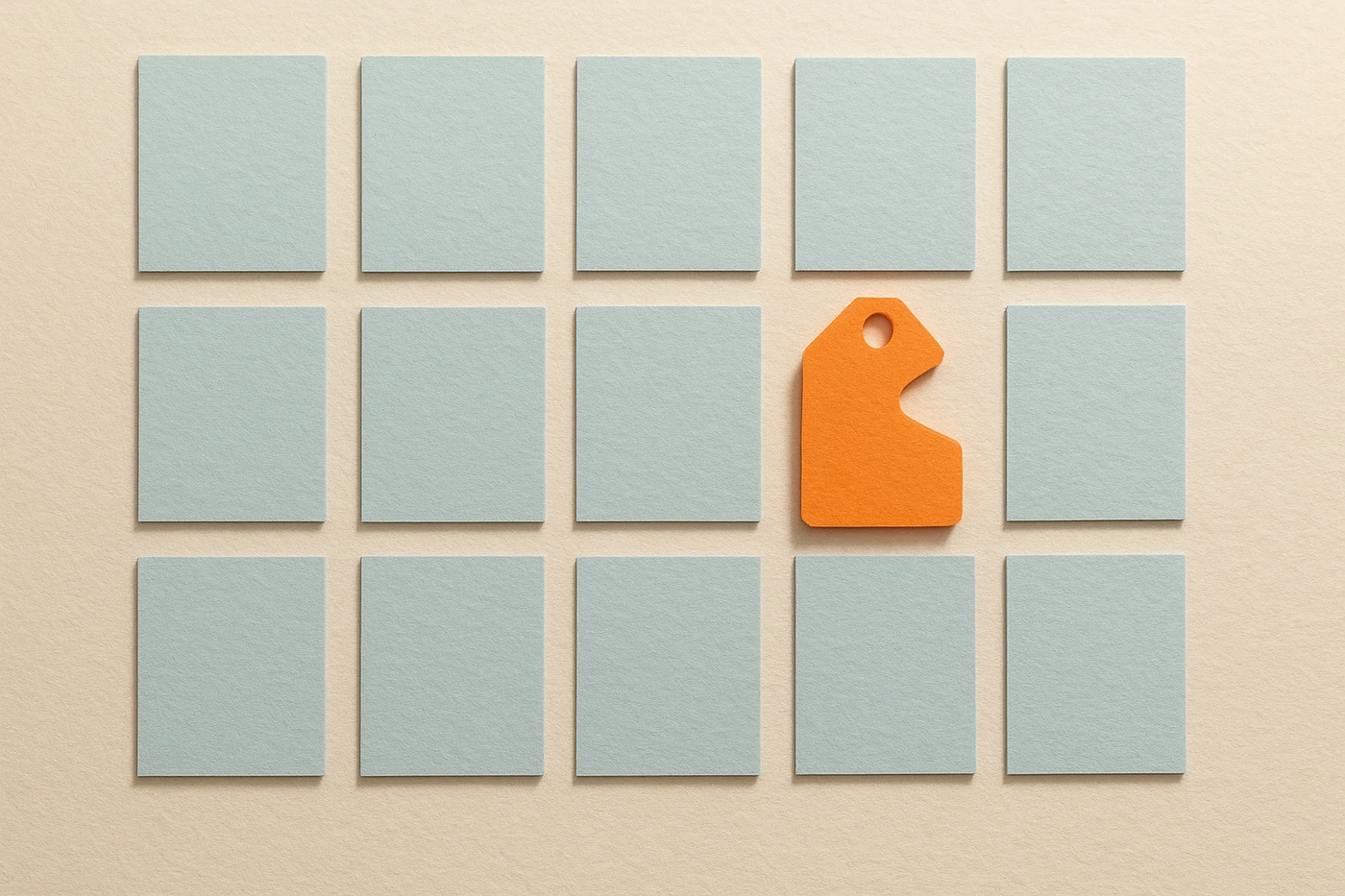
Speculative design uses one deliberately non-predictive future artifact, an object, an interface, a short scene set a few years out, to surface an assumption a team is already making about the present without realizing it. It isn't forecasting, and it isn't a roadmap with a longer horizon. A roadmap extrapolates from what's already true. Speculative design builds an uncomfortable future object first, then reads backward from it and asks what would have to be true today for that object to exist. As of September 2026, after 15 years building products across healthcare, platforms, and AI, and years spent writing a near-future novel, I use the same move in both places: build the strange artifact first, then go find the assumption it's arguing with.
What is speculative design?
Speculative design is the practice of building one concrete artifact, an object, an interface, a short scene, set a few years into a plausible future, not to predict what will happen but to make a present-day assumption visible by showing what the world would need to look like for that artifact to be normal.
Anthony Dunne and Fiona Raby's book on the subject is where I first ran into the discipline as a named practice, years before I had a use for it professionally. Their point wasn't that designers should predict the future. It was that most of what gets called "future thinking" is really just today, dressed up and pushed a few years down the timeline, still obeying every constraint we currently take for granted.
A real speculative artifact breaks one of those constraints on purpose. Then it asks what else in the world would have had to change for that break to be unremarkable.
I write a near-future novel called It Held, about a family living alongside AI agents capable enough to start performing pieces of a person's identity. It's not really a prediction about AI. It's a way of asking what has to already be true about trust, parenthood, and usefulness for that future to feel plausible rather than absurd — the same question I ask in a product review, just run at a slower, more forgiving pace.
How is speculative design different from a forecast or a product roadmap?
A forecast tries to be right about what will happen. A roadmap extrapolates today's constraints forward in a straight line. Speculative design does neither. It deliberately builds a future that might be wrong, because the point isn't the prediction. It's the assumption the wrong future forces into the open.
I've written before that good product strategy starts with the decision, not the model. Speculative design is the same discipline aimed one step earlier, at the assumption sitting underneath the decision, before anyone has agreed on what the decision even is.
| Forecast | Product roadmap | Speculative design | |
|---|---|---|---|
| Goal | Be right about what happens | Ship the next justified increment | Surface an assumption nobody's stated |
| Treats today's constraints as | Fixed inputs | Fixed inputs | The thing being tested |
| "Success" looks like | The prediction lands | The increment ships on time | Someone names an assumption they didn't know they held |
| What it can't do | Explain why people would resist it | Question whether the whole direction is right | Tell you what to build next by itself |
That last row matters most. Speculative design doesn't hand a team its next feature. It hands a team the sentence it's been building on without ever saying out loud.
What makes a speculative design artifact useful instead of just interesting?
A speculative artifact earns its keep when the room can trace it back to a specific assumption behind a real decision, not when it's clever or well made. If nobody can name the assumption it's arguing against, it's short fiction, and it gets filed as entertainment instead of evidence.
I've sat in enough product reviews across healthcare and AI platform work to know the difference by how the room reacts. A well-aimed speculative artifact makes people uncomfortable in a specific way, because it names something they'd been assuming quietly. A poorly aimed one just gets complimented on the craft and forgotten by the next meeting.
That distinction is worth being honest about, because it's easy to blur three different things in one exercise: what the artifact shows (observation), what it implies about today (inference), and what someone thinks should be done about it (opinion). The artifact only does the first job well. The second job takes a facilitator willing to ask "so what does this mean is already true," out loud, before anyone jumps to the third.
How do you actually run a speculative design exercise on a product team?
Name the assumption you want to test, push one variable to an uncomfortable extreme, build a single artifact from that future instead of a slide deck, then read the artifact backward and ask what would have to be true today for it to exist. That last step is the actual output.
The order matters more than any single step. Most teams that try this skip straight to building something futuristic-looking and never name the assumption first, which is how you end up with a cool prototype and no argument. Decide what you're testing before you decide what it looks like.
The artifact itself should be small enough to build in a day: a fake product screen, a customer support ticket from three years out, a single object on a desk that doesn't exist yet. It doesn't need production values. It needs to be specific enough that someone in the room can point at one detail and say "wait, that means we'd have to already believe X."
That question I wrote about in Jev and decision models applies directly here: a model can only choose from the options it was given, and nobody in the room is checking whether the option set was ever the right one. Speculative design is the tool for checking the option set before you've built anything that has to live inside it.
Where does speculative design go wrong?
It fails when the future scenario is comfortable, when it just extends today's trend line dressed up as fiction, or when nobody translates the insight back into an actual decision. A provocative artifact that ends the meeting instead of starting the next decision has failed, however well it was made.
The comfortable-future failure is the more common one. It's easy to build a scenario where the product just works better, faster, cheaper, with the same org chart and the same customers behaving the same way, only more so. That isn't speculative — it's a roadmap with a costume on.
The other failure is quieter and shows up a week later, when the workshop that produced a genuinely uncomfortable artifact still changes nothing, because nobody assigned the follow-up question to a person. An assumption named out loud and then not written down anywhere is an assumption that gets remade at the very next meeting, by whoever's in the room and doesn't remember the workshop.
The future artifact isn't the point. The sentence it makes someone finally say out loud is.