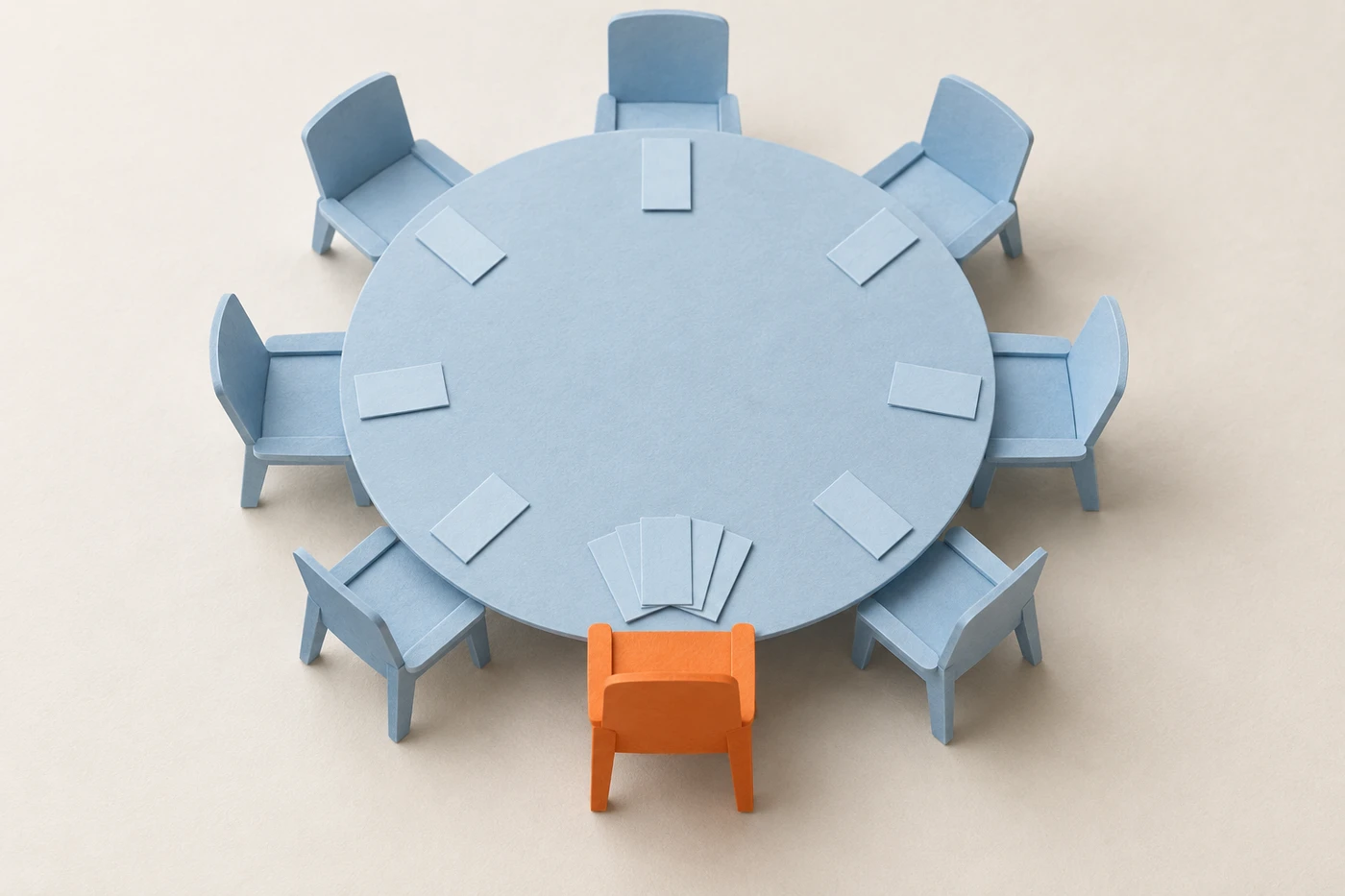
Collaborative decision making is a way of making a call where several people supply information, options, and objections before the decision is made. As of November 2026, after 15 years of building products, I think most teams get the first half right and lose the second. Collaboration settles who contributes. It doesn't settle who decides. When a process blurs the two, the group talks until the deadline passes, and nobody owns the result. My fix is small: name one decider before the discussion starts, write down who is consulted and who is informed, set a deadline, and agree on how the call gets reversed. This page explains the split and gives you a one-page decision-rights template to copy.
What is collaborative decision making?
Collaborative decision making is a process where the people affected by a decision, or who know something about it, help shape it before it is made. They bring facts, options, and objections. It is different from a vote and different from consensus. Those are two ways to finish a collaborative process. They are not the process.
The term gets used loosely. So does its cousin, group decision making. In most of what I read, both words describe the conversation and stay quiet about how the conversation ends.
That silence is the problem this page is about.
A collaborative process can end in a few ways. One person decides after hearing everyone. The group votes. The group talks until everyone agrees. Each one is legitimate. What matters is that the people in the room know which one they're in before they start talking.
Why do group decisions stall?
Group decisions stall when nobody knows who makes the final call. Everyone gives input, the input conflicts, and the meeting ends with a plan to meet again. It feels careful, but no one has decided anything. The longer it runs, the more the real decision gets made by whoever acts first, or by the calendar.
Here is what I observe. The stall rarely looks like a stall from inside. It looks like diligence. One more round of feedback. One more person to loop in. A follow-up meeting to "align."
Here is what I infer from that. Open-ended collaboration is comfortable because it spreads the risk. If everyone weighed in and no one decided, no one can be wrong.
And here is my opinion. A process that works that way is a polite way to avoid owning the call. It borrows the good name of collaboration to cover for a missing owner.
The cost lands on the people who contributed. They gave real input, and they can't tell what happened to it.
Who decides when everyone contributes?
One named person decides. Everyone else has a defined role: consulted before the call, or informed after it. Naming the decider does not make the process less collaborative. It tells contributors what their input is for, and it tells the decider that the outcome belongs to them, including when it goes wrong.
None of this is my invention. The RACI chart splits a piece of work into who is responsible, accountable, consulted, and informed. Bain & Company's RAPID model goes further and gives exactly one person the D, for decide. I borrowed the words "consulted" and "informed" straight from RACI.
My version is smaller on purpose. Those models map roles across a whole project or organization. I want something that fits one decision on one page.
The usual objection is buy-in. If one person decides, won't everyone else check out?
In my experience, it goes the other way. People can live with losing an argument. What they can't live with is not knowing whether anyone listened. A named decider who says "I heard this, I weighed it, and here is why I went the other way" earns more trust than a group that never lands.
One name. Not a committee, and not "leadership."
What goes on a one-page decision-rights template?
Five things: the decision stated as a question, one decider by name, the people consulted before the call, the people informed after it, and a deadline with a reversal rule. Fill it in before the first discussion. If you can't fill in the decider line, you have found the real problem early.
Here is the template. Copy it as is.
DECISION RIGHTS

Decision (as a question):
Decider (one name):
Consulted before the call (names, and what each is asked for):
Informed after the call (names, and how they'll hear):
Deadline (date the decider will decide by):
Reversal rule (what evidence reopens this, who can reopen it, until when):
And here it is filled in. This example is a composite I invented to show the shape. The team, the feature, and the numbers are made up and come from no real project.
| Line | Worked example |
|---|---|
| Decision | Do we cut the onboarding flow from five screens to two for the next release? |
| Decider | The product lead, by name. |
| Consulted | Design lead, for the usability risk. Support lead, for what new users get stuck on. One engineer, for the cost of each version. |
| Informed | Sales and the wider engineering team, in the weekly update. |
| Deadline | Friday of next week. If input is late, the decider goes without it. |
| Reversal rule | If sign-up completion drops for two weeks after release, the design lead or the support lead can reopen it. After 30 days it stands. |
Two lines do most of the work.
The consulted line says what each person is asked for. "Design lead, for the usability risk" is a request. A bare list of names is an invitation to talk about everything.
The reversal rule gives disagreement somewhere to go. Without it, the people who lost the argument keep reopening it in hallways. With it, they know what evidence would change the call, and so does the decider.
When should the whole group decide together?
Use consensus or a vote when the group itself has to live by the result and no single person can enforce it. Team working agreements are the usual case. Even then, write down the rule for finishing before the discussion starts. A group can own a decision. It can't do it by accident.
Think of how a team runs its on-call rotation, or what hours count as core hours. No one person can make those stick. The group has to hold itself to them, so the group should make the call.
The template still works. The decider line reads "the team, by majority vote on Friday" instead of a name. What the line can't say is nothing.
Time changes the picture too. When the clock is short, there's no room to consult widely, and the decider has to act on what they can see. I wrote about that case in decision-making under pressure. The roles stay the same. The consulted list gets shorter.
Ask everyone. Then put one name on the call.